

Basket
Loading...

What's the Difference, and Which Is Right for Your System?
When you’re designing a refrigeration system, the compressor might not seem like the most exciting part. But truth is, choosing the right one can save you a lot of headaches, and costs, down the line. Whether you're trying to hit energy targets, stay ahead of F-Gas regs, or just make sure your cases perform reliably once they're out in the field, the compressor has a big role to play.
In this article, we’ll cover the basics of the role of the refrigerant compressor and specifically look at the types of compressors you’re probably considering; reciprocating and scroll compressor technologies, so you can get a clearer idea of what’ll work best in your setup.
What is a Refrigerant Compressor, and What Does It Actually Do?
You probably already know this but just to set the scene...
In any refrigeration or air conditioning system, you need to move heat from one place to another? (Because refrigeration is about heat removal, not cooling of course). The refrigerant compressor is basically the heart of that process. Think of it as a pump for the refrigerant gas, it takes in low-pressure refrigerant from the evaporator, squeezes it to a higher pressure, and sends it off to the condenser. This compression process is what lets the system shift heat out, whether it’s from a merchandiser cabinet, walk-in, or air-cooled chiller.
In simple terms, without the compressor, the whole refrigeration cycle would stall. No compressor means no cooling. It’s what keeps the refrigerant circulating, allowing the system to absorb heat from inside a fridge, freezer, or display case and release it somewhere else. Whether you’re dealing with a small beverage cooler or a massive industrial chiller, the compressor is what makes the magic happen. It’s a critical component, and the type you choose can really impact efficiency, noise levels, and maintenance down the line.
The Big Question: Scroll vs. Reciprocating Compressors Technology?
You get it, no compressor; no cooling, so we need them. Then there’s the type. The type of refrigerant compressor you choose affects how well your system performs, how quiet it runs, how long it lasts and even how simple it is to service later.
Both types do the same basic job, but they go about it very differently, and those differences show up in performance, maintenance, cost and efficiency outcomes as well as mechanical methods. Depending on your setup and what you're trying to achieve, one might make a lot more sense than the other.
Let’s break it down in generalist terms while also taking into account that modern units and contonuous technology developments focus on making all products fit for purpose, but that fit depends on what you’re looking to achieve:
Scroll Refrigerant Compressors
Smooth, quiet and efficient is the headliner for scroll compressors. Scroll refrigerant compressors use two interlocking scrolls, one stays still, and the other orbits around it. That smooth gliding motion compresses the gas gradually, without the back and forth of pistons.
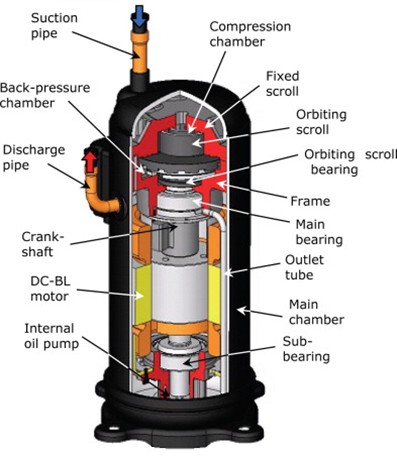
*For clarification on that last point, scroll compressors do have fewer moving parts, which can mean less wear and lower maintenance, but they are also more sensitive to system cleanliness and oil quality. If contaminants or poor lubrication are present, scrolls can fail quickly while reciprocating compressors would be tougher and more durable.
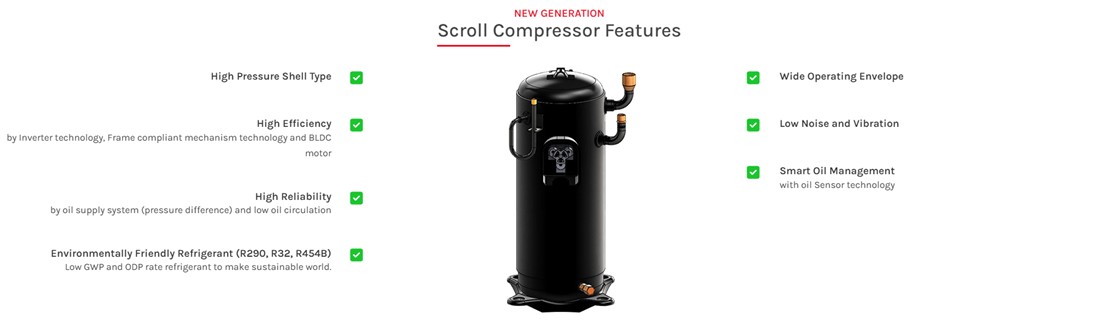
|
Scroll Compressor Advantages |
Scroll Compressor Disadvantages |
|
Great efficiency in partial load applications. |
Generally, less suited to extreme pressure ratios. |
|
Fewer moving parts resulting in less maintenance if in clean environments. |
Higher initial cost in smaller capacities. |
|
Quiet with low vibration. |
Sensitive to contaminants like dust and dirt (requires proper filtration and regular checks) |
If you’re focus is on energy efficiency, low noise, and the system isn’t running at full blast all the time, like variable load setups, then a scroll refrigerant compressor could be a great fit. They can become less efficient at extreme-pressure ratios, but in most standard refrigeration and air conditioning uses, their efficiency is competitive or superior to reciprocating compressors.
In short, if you’re staying away from a higher upfront cost on small capacities, have extreme pressure ratios, or a contaminated, dusty environment you’re probably better with a reciprocating refrigerant compressor.
Reciprocation Refrigerant Compressors
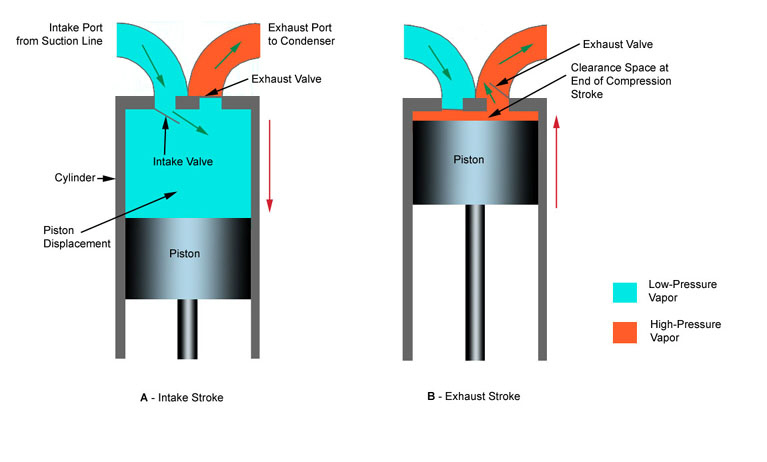
The classic design, reciprocating refrigerant compressors work more like a car engine with pistons moving up and down in a cylinder to compress the refrigerant gas. It’s a tried and tested design that can handle tougher conditions and more extreme pressures. While reciprocating compressors often have a lower initial cost for smaller capacities, at larger capacities or in some commercial or industrial applications, this cost difference can narrow or even reverse. The cost advantage is not universal across all sizes and markets so it’s worth having the chat with us to discuss the differences.
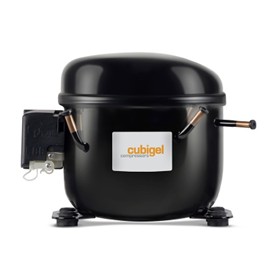
Scroll compressors are generally less tolerant of significant refrigerant charge variations compared to reciprocating compressors. They can be damaged by running with too little refrigerant, whereas many reciprocating designs are more forgiving in this respect.
While scrolls are usually quieter and have less vibration, some modern reciprocating compressors, especially hermetic types, can also be very quiet. The difference is notable but not absolute.
So, if you’re dealing with a system that needs has extreme pressures, sees tougher conditions such as contamination and oil, or you’re trying to keep upfront costs down on smaller capacities, a reciprocating unit might be the way to go.
|
Advantages |
Disadvantages |
| Can achieve high pressures required in heavy duty applications. | Older units can generate higher noise and vibration. |
| Durable and adaptable, good with different refrigerants. | More wear and tear due to moving parts, resulting in higher maintenance requirements. |
| Lower initial cost for smaller capacities. | Less efficient in partial load applications. |
Not Sure Which One You Need? That’s Where We Come In.
We get it, choosing the right compressor isn’t always straightforward. It depends on your system design, what kind of cooling demand you’re dealing with, your goals around cost and efficiency… there’s a lot to think about.
We help OEMs make this decision every day. And we get it, compressor choice isn’t always cut-and-dry. Let's discuss:
Your system’s duty cycle.
Target efficiency.
Environmental goals (like F-Gas compliance).
Build schedules and logistics reliability.
And of course, what you end customers expect from performance of the finished unit.
That’s why we’re here. We help OEMs figure this stuff out every day, and we can walk you through the pros and cons based on your actual application, not just the specs on paper. Whether you’re already leaning toward scroll, think reciprocating might be better, or just want a second opinion, we’re here to help.
