

Basket
Loading...
Choosing between a fixed-speed or variable-speed (inverter) compressor can significantly impact system efficiency, energy use, and long-term performance.
Each type of refrigerant compressor has its strengths, and the best fit really comes down to the demands of your application. Do you have constant cooling requirements, or does demand shift throughout the day? Are you working in a temperature-sensitive environment? Are you trying to reduce energy costs, or is simplicity and reliability more important? It’s important to let your supplier know what your goals are so the design and component selection can match.
Let’s start with the basics and look at how these apply to real-world systems. So, what’s the difference between inverter-driven, and fixed-speed compressors?
Inverter Compressors
Inverter, or variable-speed compressors, adjust their motor speed to match heating or cooling demand, rather than cycling on and off. This maintains a stable system performance.
For you, this reduces energy consumption in systems with fluctuating loads, delivers smoother temperature control, reduces component wear and tear from frequent stop/start cycling, lowers noise levels, and overall better long-term performance.
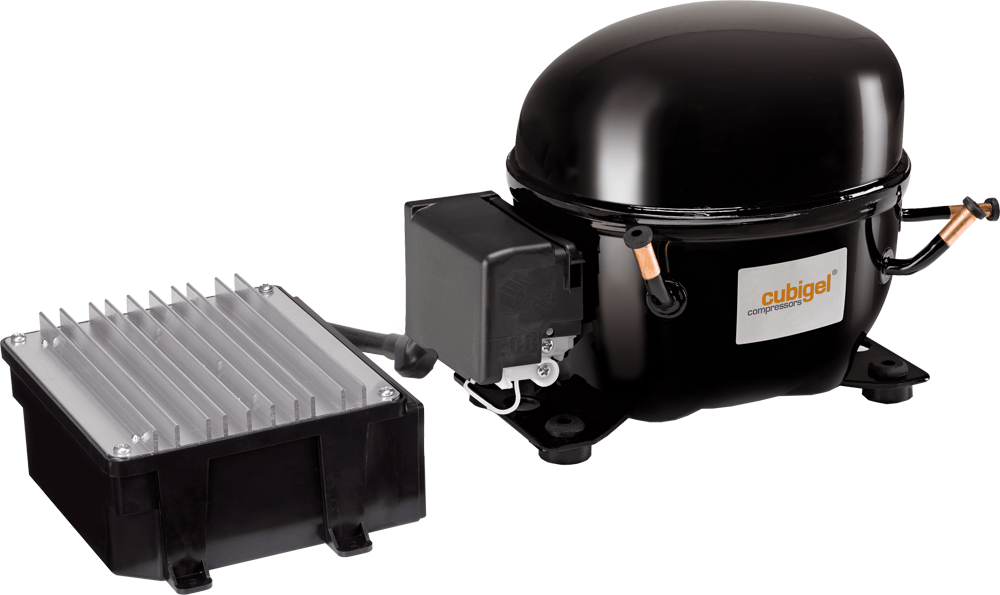
When Would We Use an Inverter or Variable Speed Refrigerant Compressor?
Just to name a few, Inverter compressors are ideal for applications with fluctuating thermal loads, or where tight temperature control is critical. In terms of industries we serve, think Biotech & pharma labs where precise temperature stability protects samples and production conditions, food processing lines where variable production schedules create fluctuating cooling demands, environmental test chambers where load conditions change during test cycles, server rooms or data centres where temperature spikes can occur suddenly based on activity levels, or plastic extrusion & moulding where equipment may cycle on and off throughout the day, varying the cooling requirement. All of these scenarios have one thing in common, the demand fluctuates, so as you might expect, variable-speed compressors may not be ideal when cooling demand is constant or always at full capacity.
A bonus benefit about variable speed compressors is that they are a great option when you're trying to reduce operating costs or meet sustainability targets, since they run at optimal efficiency rather than always at full power. Great for regulated industries and those with ambitious carbon reduction targets.
When are Inverter led, or Variable Speed Compressors not ideal?
As they change motor speed to meet demand, they’re not really designed for systems with 100% constant cooling demand as we said above, where efficiency gains from speed control aren’t noticeable, or in businesses with tighter controls on initial spend, as inverter compressors usually cost more upfront.
Fixed Speed Compressors
Fixed speed refrigerant compressors are exactly how they sound, they run at one speed, delivering a consistent output. If you have a simple, reliable design, want lower upfront costs and have a steady, predictable load, then fixed-speed compressors are a simple, effective choice.
In refrigeration, they're often used in smaller, standalone systems or where a constant cooling output is needed, like cold storage units, think about cold storage rooms with constant demand, retail refrigeration units like display fridges or freezer cabinets, process chillers in packaging environments with consistent activity, blast freezers or chillers operating at steady capacity, or cold chain logistics centres with consistent air temperature targets.
What are Fixed Speed Compressors not ideal for?
The downside of fixed speed compressors is pretty self-explanatory, really. If your system doesn’t always need full capacity, you’ll waste energy. These compressors still run at full tilt, even when less cooling is needed. This can lead to higher energy bills and greater system wear over time.
Can We Benefit from Hybrid Inverter Configurations?
Many modern systems combine fixed-speed and inverter-driven refrigerant compressors to create hybrid configurations that get the best of both worlds.
Here’s how it works: the inverter compressor responds to fluctuating load demands, the fixed-speed compressors provide stable base cooling when demand is steady. This also improves redundancy, if one compressor is offline for maintenance, the other can maintain operation without interruption
Hybrid refrigerant compressor systems exist in food production lines where shift patterns and batch processing change daily, in environmental test facilities running multiple cycles with different conditions, in pharmaceutical storage spaces with varying room volumes or product sensitivities, or in plastics and injection moulding with varying cooling requirements across machines or tool cycles.
To Summarise: Fixed Speed or Variable Speed Refrigerant Compressors?
Both types of compressors have clear advantages, it’s just a matter of matching them to your application. If you're dealing with sensitive environments, varying cooling loads, or you're aiming to improve system efficiency, it’s worth considering how inverter technology could benefit you.
Whether you're upgrading an existing refrigeration system, designing a new process environment, or just trying to get more efficiency from your setup, we can support you with the right technical advice and the components to match. Get in touch to start your project, the best decisions happen when there’s early-stage input and close collaboration, what are you waiting for?
